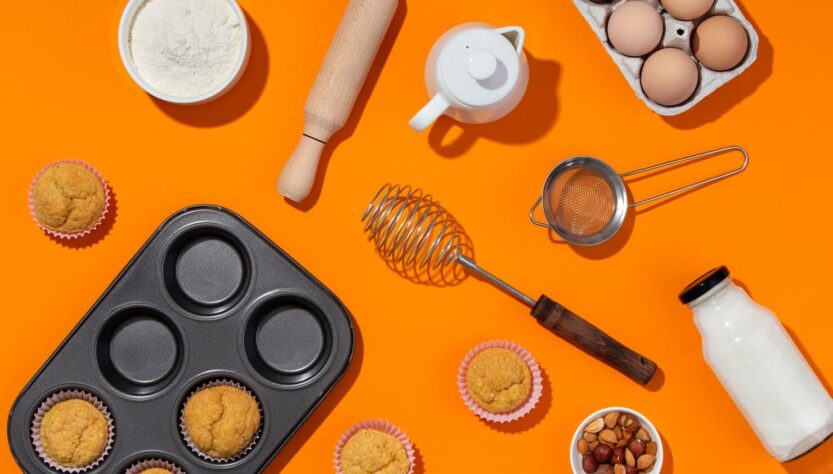
The world of pastry is one of enchanting transformations—where humble ingredients like flour, butter, and sugar are spun into edible art. For the aspiring chef, the journey begins not just with a recipe, but with a well-chosen set of tools. A common misconception is that you need a kitchen filled with expensive, single-use gadgets. The truth, however, is that a curated collection of versatile, high-quality essentials will serve you far better than a drawer full of clutter. This guide moves beyond a simple shopping list; it’s a philosophy for building a toolkit that will grow with you, enabling you to tackle everything from a simple cookie to a complex entremet with confidence and precision. We will explore the tools in three essential categories: the foundational workhorses, the instruments of precision, and the artists’ tools for the perfect finish.
The Unshakeable Foundation: Your Culinary Cornerstones
Before you can create a masterpiece, you must have a solid foundation. These are the non-negotiable items that form the bedrock of all pastry work. They are not glamorous, but they are the most critical investments you will make. The single most important tool, and the one that immediately separates professional pastry from casual baking, is a digital kitchen scale. Pastry is a science of ratios, and measuring by weight (grams) instead of volume (cups) is the only way to guarantee consistency. A cup of flour can vary in weight by 30 grams or more depending on how it’s packed, a variance that can be the difference between a tender cake and a tough brick. Invest in a scale with a “tare” function (to zero out the weight of your bowl) and that measures in one-gram increments.
Alongside the scale, you need a set of sturdy, stainless steel mixing bowls. Choose a set with at least three different sizes. They are durable, non-reactive (unlike copper or aluminum, which can react with acidic ingredients), and versatile enough for mixing, melting chocolate over a double boiler, or chilling a crème anglaise. To work with these bowls, you’ll need at least two types of spatulas: a flexible silicone spatula for scraping every last bit of batter from a bowl, and an offset metal spatula. The offset spatula, with its bent handle, will quickly become your best friend for spreading fillings and applying a smooth, even layer of frosting. Finally, a good-quality balloon whisk is indispensable. Its wide, flexible wires are designed to incorporate maximum air when whipping egg whites or cream, a task a simple fork could never accomplish.
Instruments of Precision: Tools to Elevate Your Craft
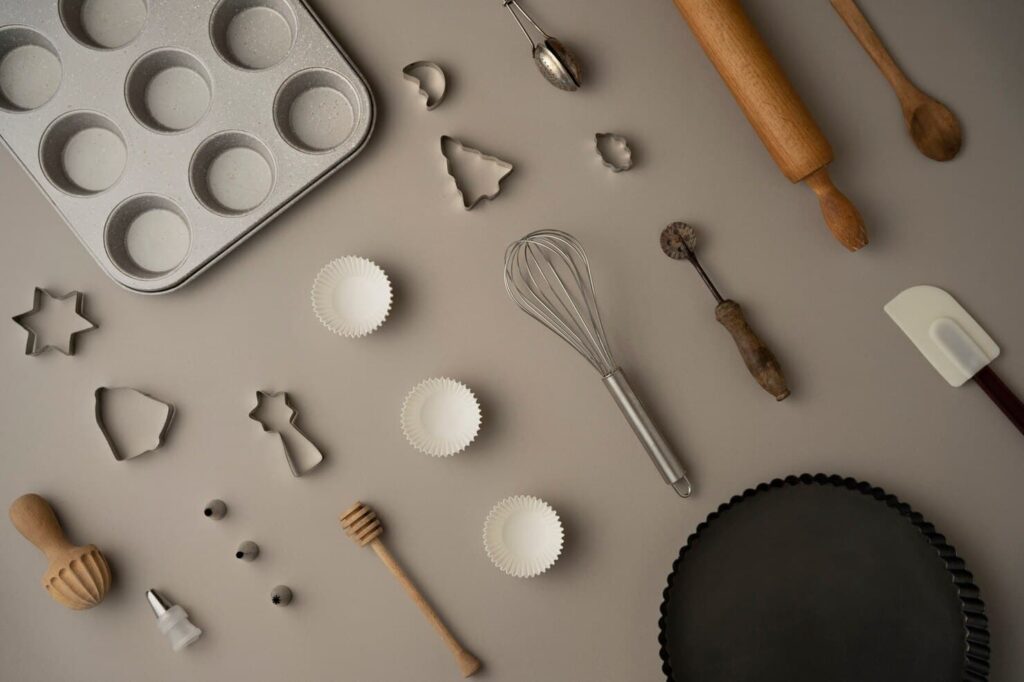
With the foundation laid, the next step is to acquire tools that enable accuracy and control. This is where you refine your technique and achieve professional-level consistency. While the scale provides the initial precision, these instruments help you maintain it throughout the cooking and baking process. They allow you to manipulate ingredients with intention, ensuring your final product is not just delicious, but also technically sound. Mastering these tools is a key step in transitioning from a home baker to a true pastry artisan.
Here are the key items that introduce a higher level of control:
- A Digital Instant-Read Thermometer: Essential for sugar work, tempering chocolate, and ensuring custards are cooked to the perfect temperature without scrambling.
- A Bench Scraper: This simple, flat piece of metal is a surprisingly versatile workhorse. Use it to divide dough, clean flour from your work surface, lift sticky pastry, and even smooth icing on the side of a cake.
- A French Rolling Pin: Unlike the American-style pin with handles, a tapered French pin offers superior control and allows you to feel the thickness of the dough beneath it, promoting an even, uniform sheet.
- A Fine-Mesh Sieve: Absolutely critical for sifting dry ingredients to remove lumps and aerate them, as well as for straining custards or purées to achieve a silky-smooth texture.
- A Set of Pastry Brushes: You’ll want one with natural bristles for delicate tasks like applying egg wash and a silicone one for brushing hot sugar syrups, as it won’t melt or shed bristles.
Having these tools at your disposal allows you to follow recipes with exactness. When a recipe calls for a sugar syrup to reach the “soft-ball stage,” you won’t have to guess by dropping it in cold water; your thermometer will tell you precisely when it hits 115°C (239°F). This level of accuracy removes guesswork and empowers you to replicate complex recipes successfully time and time again.
The Art of the Finish: From Baking to Beautifying
The final category of tools is dedicated to the transformation from baked good to beautiful dessert. This is where your artistry comes to life. Even the most delicious cake can be elevated by a flawless presentation. The first step in this stage is the bake itself. Invest in heavy-duty, light-colored aluminum baking sheets (often called half-sheet pans). They conduct heat evenly, preventing the “hot spots” common in darker, thinner pans that can burn the bottoms of your creations.
Once your components are perfectly baked, it’s time for assembly and decoration. A set of piping bags and a few basic metal tips are essential. You don’t need dozens to start; a medium round tip, an open star tip, and a small round tip will cover a wide range of tasks, from filling macarons to piping rosettes on a cupcake. Paired with your offset spatula for creating a smooth base coat of icing, these tools are the foundation of pastry decoration. As your skills advance, you might add a cake turntable for easier frosting or more specialized piping tips, but these core items will carry you far. Remember, the goal of a starter toolkit is not to have everything, but to have the right things—the versatile, high-quality essentials that empower you to learn, practice, and perfect the sweet science of pastry.